
The Late-Nesting Goldfinch
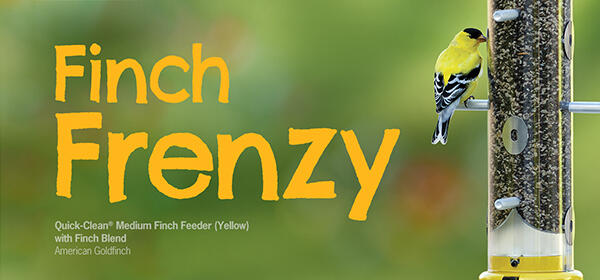
If your goldfinch feeders suddenly get busier for a stretch in late summer and fall, there's a good reason for it: goldfinches nest later than almost any other songbird in your yard.
While many of your local birds are already on their second or third brood of the season, goldfinches are just getting started. They typically don't begin nesting until mid-to-late summer, and their nesting season can run into early fall.
Why they wait
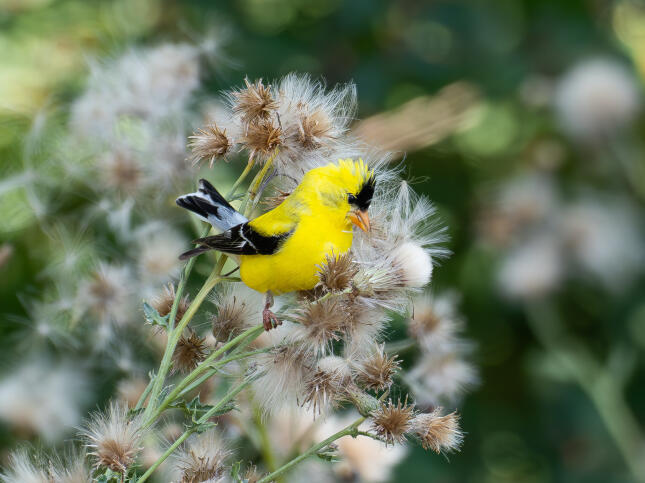
It comes down to food. Goldfinches are almost entirely seed eaters — even when feeding their young. That's unusual; most songbirds switch to insects to feed nestlings, but goldfinches don't. So they wait for two things to line up: their preferred nesting material and a steady seed supply. Thistle, milkweed, and other plants need to go to seed and release their soft, fluffy down before goldfinches are ready to build.
Feeding Tips
Goldfinches are picky eaters. For best results, offer:
- Nyjer (thistle) seed — the classic choice. Best served in a mesh or tube feeder with small ports
- Sunflower chips — a close second, and the inspiration behind our WBU Finch Blend, a mix of nyjer and fine sunflower chips
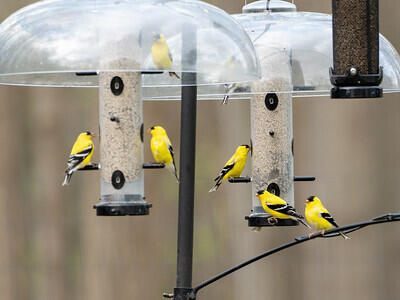
If feeder traffic slows down, check your seed. Nyjer loses oil content and goes stale faster than most people expect, especially in humid weather. Fresh seed makes a noticeable difference.
Spotting a nest
Look for a tightly woven cup nest, low in a shrub or sapling. That's a goldfinch nest — and it's often surprisingly close to human activity. No matter how comfortable birds may seem in our presence, be sure not to disturb a nest or stress birds who are busy parenting.
Molting twice a year
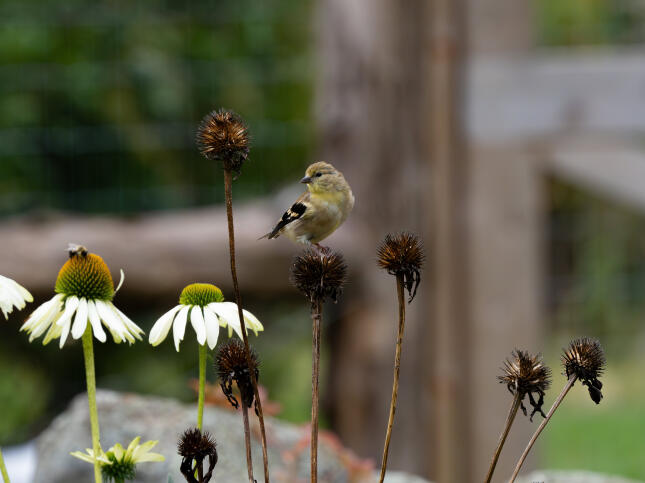
Goldfinches molt twice a year, and the change is easy to see if you know what to watch for. In late winter and early spring, males start trading their muted olive winter coat for that unmistakable bright lemon-yellow — one of the first real signs that spring is on its way, and a welcome bit of color after a long gray winter.
That vivid yellow (the color females evaluate when choosing a mate) holds through the breeding season, then fades back to a duller olive once nesting wraps up. Females molt too, though their shift is more subtle year-round.
Keep your goldfinches happy
- Keep finch feeders filled with fresh seed
- Leave spent flower heads on coneflowers, black-eyed Susans, and native asters a little longer before deadheading
- Keep a shallow water source available — goldfinches use it for both drinking and bathing year-round
- Plant native plants; it's simple -- more native plants, more birds
⭐️ Keep an eye on your feeders through the seasons — you might catch that first flash of yellow in spring, or a fledgling learning the ropes come late summer. If you want help setting up a bird feeding station to attract goldfinches, stop in -- we can help!